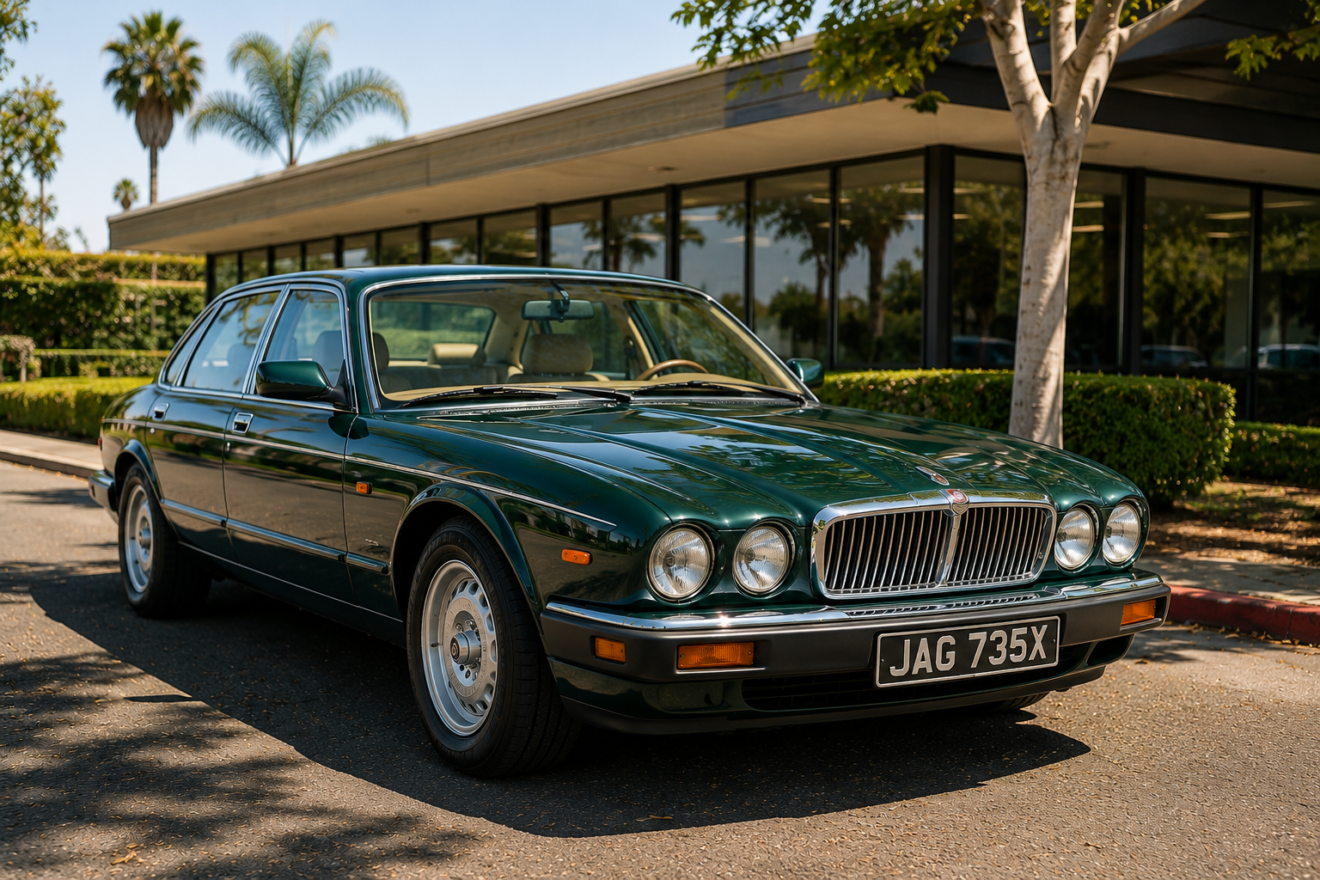
What does a green Jaguar have to do with Contact Center KPIs? More than you might think.
This article is part of our Contact Center Management Series — a collection of articles that bring together practical guidance and insights to help Contact Centers run better and deliver stronger results.
Suddenly, I Was Appointed VP of Operations
One sunny afternoon in Los Angeles, the company CEO appointed me to my first VP of Operations role, running Contact Center and Distribution operations for a music and entertainment company in the U.S.
Up to that moment, I had served as the VP of Finance — preparing financial statements and analyses while leading our small accounting team.
The existing VP of Operations had resigned earlier that morning.
And that afternoon, the CEO offered me her job.
For which I had no practical experience.
I was about to take over the service and warehouse operations, as well as the day-to-day management of hundreds of Contact Center professionals.
In hindsight, I suspect I landed the job because I was trusted.
I knew the business’s numbers.
For senior people, that means something.
We Lacked Industry Know-How
Like many Contact Centers in the early 1990s, we had limited access to formal industry education.
The departing VP of Operations had known more than any of us.
Fortunately, she had established the core processes and had even mentored me in the years we worked together.
My background in finance also proved incredibly useful.
It had taught me about strategy, which business levers mattered most, and how to use data to tell a story.
But an inbound Contact Center is unlike most other business environments.
To succeed in this industry requires an understanding of operational mathematics and the relationships between key performance indicators.
Even though I was now, formally, a VP of Operations, I didn’t have industry know-how. And my Boss, the Executive Vice President, knew even less than I did.
That’s not unusual, even today.
Many senior executives inherit a Contact Center without ever really understanding how it works.
Distance Had Its Advantages
The company built our Contact Center & Distribution facility from the ground up.
It was located in the industrial area of a small beach town, 20 miles away from our posh corporate headquarters in Santa Monica.
That distance turned out to be an advantage.
Our people enjoyed a sense of independence, and I enjoyed separation from day-to-day corporate politics.
My Boss, the Executive Vice President
My Boss was a lifelong record company executive and a highly respected figure in the music industry.
She stood about 6’1″ (186 cm) tall, wore bold statement jewellery, and could perform complex currency calculations in her head.
I liked her enormously — and I also feared her just enough.
Many people feared her even more.
Each year she received a new company car — that year it was a British racing-green Jaguar sedan.
Our single-storey Center had windows running across the front, giving our reception team a clear view of every car arriving and leaving.
Those windows — and the quick reaction of our Receptionist — play an important part in this story.
The Boss Comes for a Visit
Not long after I took over as VP of Operations, my Boss called and said she wanted to visit the Contact Center and see the operation in action.
Of course, I said yes and let our team know she was on her way.
One of the practical lessons I share in my Contact Center Management courses is this:
If your Boss doesn’t understand how a Contact Center works, don’t let them walk unescorted through the Center.
For someone unfamiliar with Contact Center operations, it’s easy to jump to the wrong conclusions — because much of what matters isn’t visible.
You can’t see many of the things that tell you how a Contact Center is performing simply by scanning the floor.
Unfortunately, I made this mistake — and when she arrived, I suggested she have a look around while I handled another matter.
Armed with a small notebook, she set out into the Center, checking out each of the Advisors on the floor.
If she saw an Advisor talking to a Customer or typing on their keyboard, she nodded approvingly and moved on.
If she saw someone who happened to be waiting for the next call, she wrote down their name in her notebook.
Half an hour later, her 6-foot-1 frame appeared in my doorway.
She wasn’t smiling.
“Daaaaan,” she drawled in her Southern accent, “you’ve got a big problem.”
“You’ve got a lot of lazy people out there not doing anything, so you must be overstaffed. Is this how you normally run an efficient operation?”
She carried on a bit about how much money we were wasting.
“Fix this. Or we’re going to have a serious discussion about your performance.”
She marched out the door, climbed into the green Jaguar, and drove away.
A Week Later, She Paid Us a Surprise Visit
About a week later, our Receptionist burst into my office.
“She’s here! She’s here!”
She had spotted the green Jaguar through the windows as it pulled into the car park.
This visit was unplanned, and I did what any fast-thinking VP of Operations would do.
I rushed out onto the Contact Center floor, grabbed the first three Advisors I found and blurted out:
“You, you, and you. Sign off and go hide in the pantry. Now please!”
Just as the three bewildered Advisors disappeared into the pantry, my Boss strode through the front door.
She glanced at me for a moment, then walked onto the Contact Center floor.
Now, before I tell you what happened next, stop for a moment and imagine the scene in front of you.
What did she actually see?
The Chain Reaction
Remember, we are now technically short-staffed because I had pulled three Advisors off the phone and sent them to hide in the pantry.
So as my Boss gazed across the floor, all our remaining Advisors were busy.
They were either talking to a Customer, typing on their keyboard, or both.
From her perspective, the operation appeared busier than it had on her last visit.
But here’s what she couldn’t see.
Removing three Advisors from the phones didn’t improve the Contact Center’s performance.
It simply changed what was visible.
A chain reaction had begun.
Let’s look at that chain reaction now:
Raise your arms in the air and get ready to flap your wings like a chicken.

- When I removed three Advisors from the phones, Service Level went down (arms go down).
- As Service Level fell, Occupancy went up (arms go up).
- Advisors had less time between contacts, so Available Time went down (arms go down).
- Customer Wait Time went up (arms go up).
- Customers waited longer, so Customer Satisfaction with Wait Time can go down (arms go down).
- As queues became longer, Abandonment Rate can increase (arms go up).
- Under greater workload, Quality can begin to fall (arms go down).
- Calls Handled per Advisor went up (arms go up) — not because anyone suddenly became more productive, but because fewer Advisors were carrying the workload.
- Over time, Employee Engagement can go down (arms go down) — as Advisors grow weary of unpredictable working conditions.
I call this the Chicken Dance.
And I’ve performed it with participants in Contact Center Management training since 2003.
With this story and dance, I can demonstrate a fundamental principle of Contact Center Management.
Individual Contact Center KPIs don’t move in isolation.
Without an understanding of how metrics interrelate, we can easily jump to the wrong conclusions.
Just like my Boss had.
I Dedicate the Chicken Dance to My Former Boss
Almost every management decision creates a chain reaction.
Change one operational measure and several others are likely to move with it — for better or for worse.
Thousands of people have joined me in performing the Chicken Dance in training rooms, conference rooms, on stages, and even online.
I’ve seen for myself that when Contact Center professionals understand the relationships between Service Level, Occupancy, Quality, Customer Experience, Employee Experience, and the other key measures, they make better operational decisions.
And they can explain the logic behind those decisions to others.
I dedicate the Chicken Dance to my Boss with the green Jaguar.
Thank you Chris.
Continue Your Contact Center Operations Development
If you’d like to continue developing your Contact Center Operations knowledge, you might enjoy these articles:
15 Quiz Questions on Contact Center Operations Management (Part 1)
15 Quiz Questions on Contact Center Operations Management (Part 2)
Implementing Appropriate Contact Centre Wait Time Metrics
True Calls Per Hour: Balancing Quality and Productivity
The Pooling Principle in Contact Centers: What Every Manager Should Know
What To Know About Contact Centre Agent Performance
Help Your Contact Centre Team Leaders Do Better — Part 1
Why Are You Still Talking About Average Handling Time?
Thank You for Reading
I regularly share stories, strategies, and insights from our work across Contact Centers, Customer Service, and Customer Experience. If this article resonated with you, I’d be pleased to stay connected.
Feel free to get in touch anytime, or explore more of our work below.
Daniel Ord
[email protected]
www.omnitouchinternational.com