
What you see is not all there is.
This article is part of our Being Human Series — stories and insights on values, self-awareness, judgment, relationships, and how we are experienced by others.
There is more to the story than meets the eye.
The Mona Lisa
More than 10 million people visit the Louvre each year, many with one goal: to see the Mona Lisa.
You step into a long snaking line and you’re herded to the front of the painting, where you have a few moments to eyeball it, snap a photo, and move on.
As I weave through that queue myself, I wonder how many people around me know some of the story behind the painting?
For example:
- Do they know the Mona Lisa was stolen from the Louvre in 1911 and that its fame exploded because of that theft?
- That it’s painted on wood, not canvas?
- That Leonardo da Vinci was already in his 50s when he began painting it?
Those parts of the story are Beyond the Frame — context that enriches and deepens what you see.
What You See Is All There Is
Psychologist Daniel Kahneman coined a phrase for the human tendency to make judgments based only on what’s visible.
He called this tendency What You See Is All There Is.
I come across this tendency when delivering training:
- Just because your team member isn’t performing doesn’t mean it’s entirely their fault.
- Just because your organization values certain ways of doing things doesn’t mean every organization values those things too.
- Just because a percentage of Customers complete a survey doesn’t mean their responses represent what all Customers think — or what they actually do.
In each case, what we can see is only part of the story.
The Tour Guide
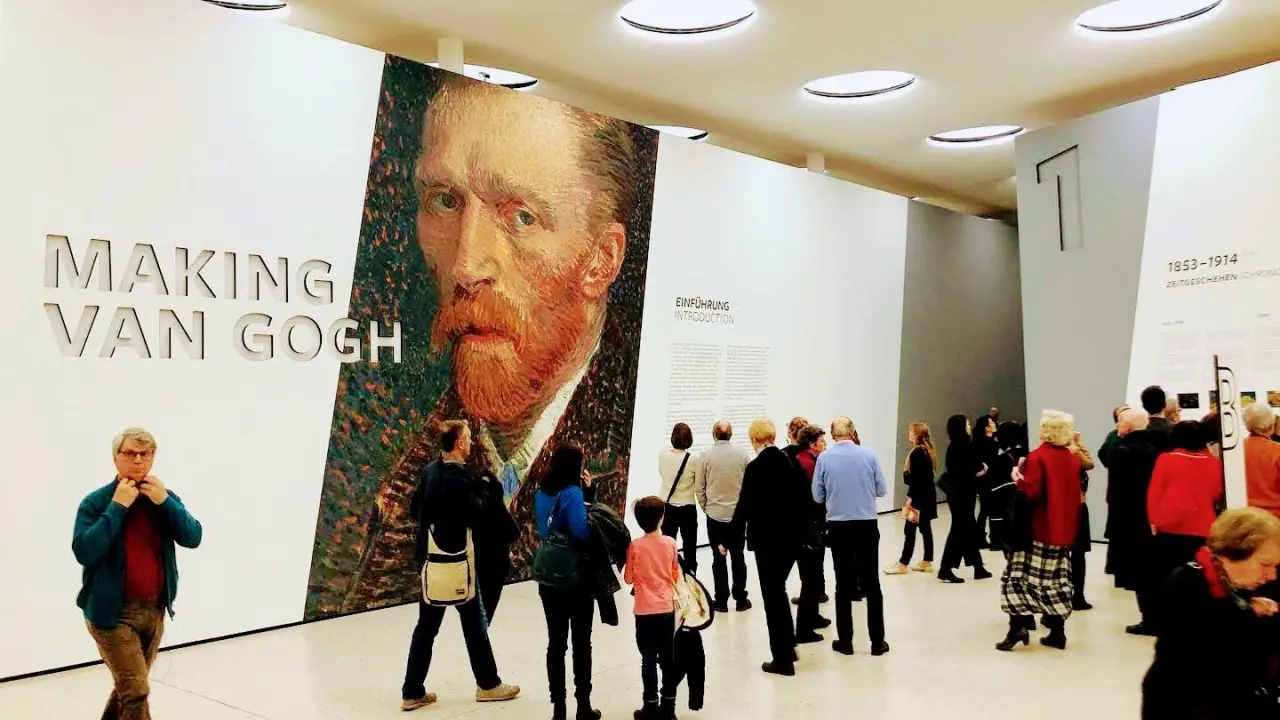
I visited the Van Gogh exhibition in Frankfurt.
Strolling through the galleries, I observed people studying Van Gogh’s distinctive brushstrokes and style.

Because I worked at The J. Paul Getty Museum in Los Angeles and later owned an art gallery for several years, I learned that part of what makes an artwork fascinating is the story behind it.
That story might be of the artist and their life, the materials and techniques they used, or what influenced them, including the culture of their time.
Surrounded by all those beautiful paintings, I had the humility to recognize that I didn’t fully understand what I was looking at, so I joined a guided tour.
From the tour guide, I learned how a specific painting fit into the evolution of Van Gogh’s work, what he was going through as a human being, and what influenced the way he saw the world.
The tour guide helped me see what I would not have seen on my own.
Becoming the Tour Guide
Sometimes, we need a tour guide.
At the Städel Museum in Frankfurt, I’m grateful I had a good one.
And sometimes we play that role for someone else.
We bring our know-how, context, and perspective to someone else.
In Customer Experience and Contact Centers, I’ve seen the most effective leaders — at all levels — naturally assume the role of tour guide.
They think and act like teachers.
They understand why something is the way it is and are able to explain it to someone else.
If What You See Is All There Is reminds us that people tend to make judgments based on what they see, then part of teaching is helping people see more.
That’s what the tour guide did for me at the Van Gogh exhibition.
They didn’t tell me what I was supposed to think.
They gave me more to think about.
Perhaps that’s why I write Beyond the Frame — and why I write articles, speeches and training programs.
Writing helps me process and refine my own thinking.
And when I share those thoughts, maybe they help someone else look at something differently too.
That’s enough to keep me going.
Thank You for Reading
I regularly share stories, strategies, and insights from our work across Contact Centers, Customer Service, and Customer Experience. If this article resonated with you, I’d be pleased to stay connected.
Feel free to get in touch anytime, or explore more of our work below.
Daniel Ord
[email protected]
www.omnitouchinternational.com